
Posted On: June 15, 2026 by First Community Bank and Trust in: Community Banking Community Banking Advocacy Community Events Community News Electronic Banking General
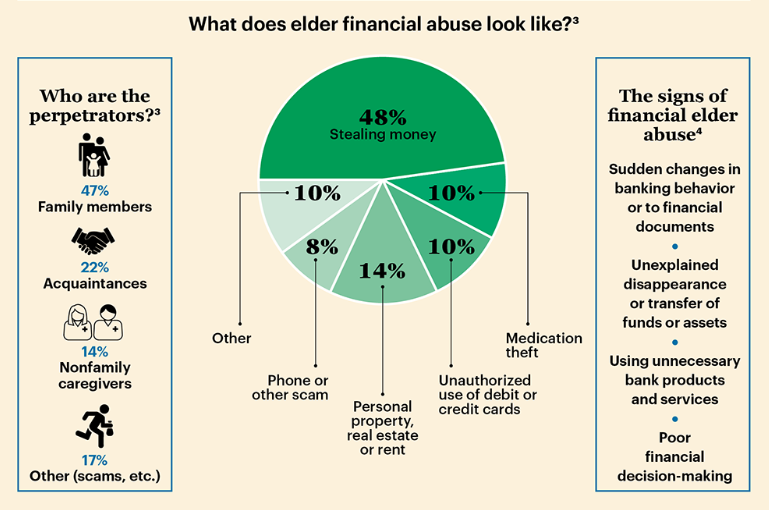
Financial abuse targeting older adults causes significant losses for people over 60 each year. True losses from elder financial abuse could be even more as many go unreported, and of those that are reported, nearly half of adults say they were either victims or intended victims of financial exploitation.
Community banks are in a unique position to help shield our elderly customers against such abuses. Through employee training and the use of technology to spot red flags and report suspicious activity to authorities, our status as relationship lenders and financial first responders leads to increased safety.
With World Elder Abuse Awareness Day on June 15, we wanted to provide our nation’s seniors and their family members with tips to guard against financial exploitation and highlight some of the most prevalent types of fraud.
Medicare/Health Insurance Scams
It is difficult to imagine that someone could prey on those in need of medical assistance, but unfortunately, Medicare fraud is common. Criminals are posing as Medicare or medical supply representatives to obtain personal information or provide bogus services and use the information to bill Medicare or assume an identity to perpetrate fraud.
As a good rule of thumb, never share personal or financial information with anyone who contacts you out of the blue.
Zoom Phishing Emails and Internet Fraud
Con artists are also capitalizing on the rise in video meetings, registering thousands of fake Zoom-related domains to send phony emails, texts, or social media messages to trick consumers into clicking on bogus links to address “account suspension” or “meeting” notices, among other things. Those who take the bait inadvertently download malicious software, exposing their personal information to potential use by fraudsters.
Internet scammers are also known for sending fake text messages alleging trouble with an internet account, credit card, bank account, or shopping order. Many contain realistic-looking logos to lure you into clicking on a link and divulging personal information.
To limit your exposure, avoid clicking on links from unsolicited emails or texts. If you suspect a problem with an account, contact the bank or service provider directly. Healthy skepticism and initial hesitation, followed by a real phone call, will never hurt.
Telemarketing/Phone Scams
Seniors schooled in etiquette may frown upon “hanging up the phone” or simply saying “no” to unsolicited calls, but it also leaves the door open to criminals posing as company representatives. Three notable examples include:
- The pigeon drop where con artists pretend to share found money in exchange for a “good faith” payment drawn from the contacted person’s bank account.
- The fake accident ploy where con artists create a false narrative that a loved one has been injured in an accident and needs money for medical expenses, or a similar exploitative situation.
- Charity scams where con artists solicit funds on behalf of a charity for which they are not affiliated.
Don’t fall for it. Remember, if it’s too good to be true, it probably is. If you want to donate, go directly to the source. And if you are worried about a friend or family member, verify the information with them.
Consider developing a word or phrase to be used with your family and friends to confirm their identity—something that would never be guessed, is always remembered, and will never be written down on any digital device. On that note, a comprehensive AARP analysis that integrates both reported and unreported cases finds that most losses—over 72%—are caused by someone the victim knows.
Unfortunately, scams are always changing, making fraud nearly impossible to fully eradicate, but we’ll never stop looking out for your benefit and encourage you to consult the Federal Trade Commission’s “scam alert” page for information about the latest scams targeting consumers.
First Community Bank and Trust employees are trained on the latest fraud prevention techniques and are available as a resource as well. We can help you spot potential scams and take appropriate measures to protect your account if you suspect you have been a victim of financial fraud.
About First Community Bank and Trust
First Community Bank and Trust is a privately-owned bank. Established in 1916 First Community Bank and Trust has been serving Beecher, IL, Peotone, IL and the surrounding communities for over 110 years. Our commitment to providing the best banking products and services is matched only by our outstanding customer service. We offer traditional community banking services, including mortgage, consumer, and commercial lending, as well as state of the art electronic banking services.
Press Contact:
Steve Koehn, Senior Vice President
First Community Bank and Trust
(708) 946-2246
About ICBA
The Independent Community Bankers of America® has one mission: to create and promote an environment where community banks flourish. We power the potential of the nation’s community banks through effective advocacy, education, and innovation.
As local and trusted sources of credit, America’s community banks leverage their relationship-based business model and innovative offerings to channel deposits into the neighborhoods they serve, creating jobs, fostering economic prosperity, and fueling their customers’ financial goals and dreams. For more information, visit ICBA’s website at icba.org.
###
0 comments